

Articolo del 18/02/2026
How far have we really come in preventing breast cancer?
Is early diagnosis the same for everyone?
In recent years, breast cancer prevention has made significant strides thanks to advances in diagnostic technologies. Today, it is possible to detect even very small changes—often before symptoms appear—dramatically improving treatment options and outcomes. But how much progress have we truly made? And is early detection equally accessible for all women?
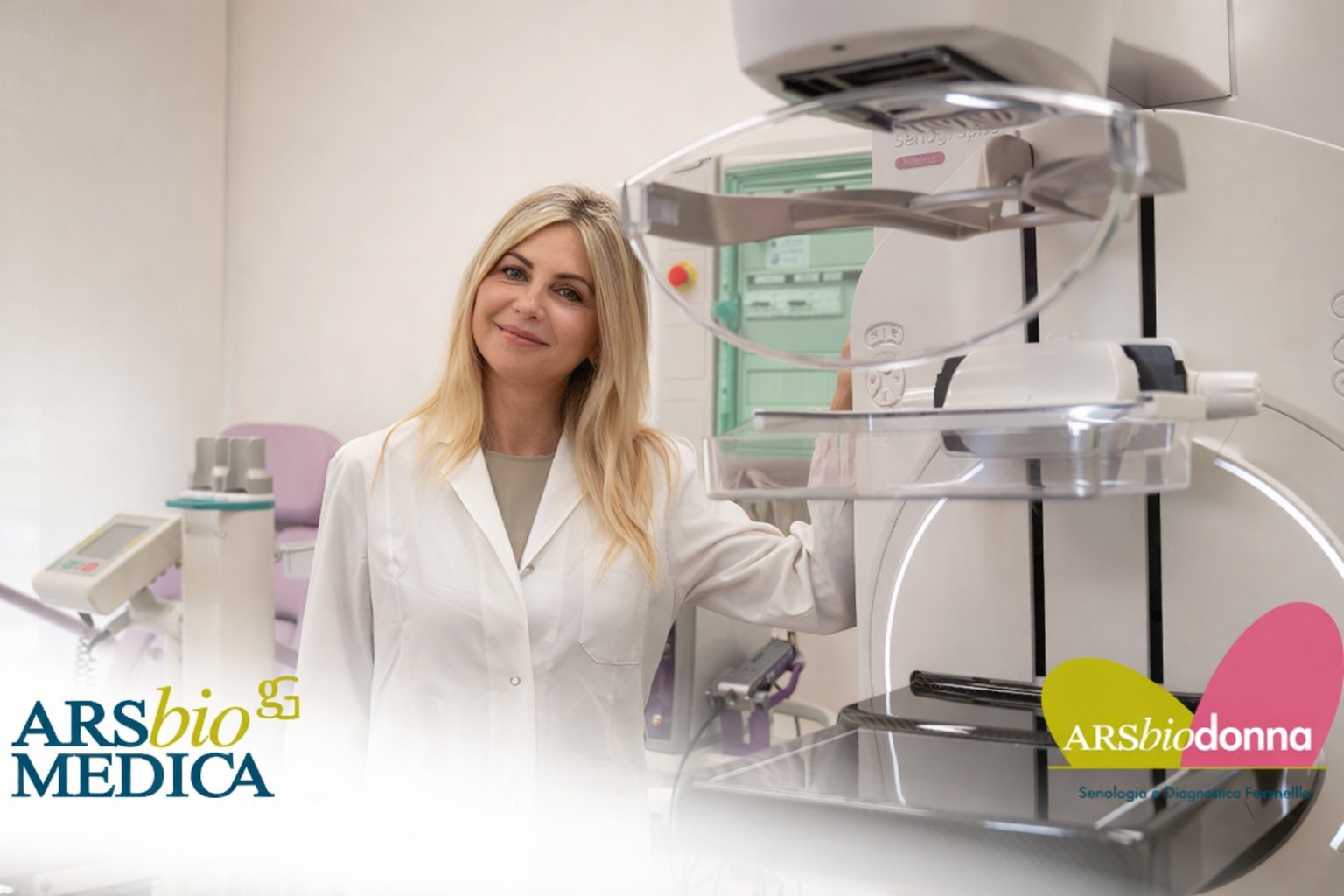
We discuss these questions with Prof. Chiara Pistolese, breast radiologist of the Arsbiodonna program at Arsbiomedica Clinic.
Technology and Prevention: An Increasingly Close Partnership
“Breast cancer prevention relies on a combination of tools that have evolved over the years in both precision and safety. Digital mammography, high-resolution breast ultrasound, and, in selected cases, magnetic resonance imaging (MRI) now allow for far more accurate evaluation of breast tissue than ever before.
These technologies not only improve image quality but also reduce radiation exposure, making routine screenings safer and faster over time.”
Does Early Diagnosis Make a Difference?
Detecting cancer at an early stage allows for less invasive treatments and generally more favorable outcomes. This is why screening programs and regular check-ups are essential tools for every woman’s health.
Early detection is not accidental—it is the result of regular monitoring, accurate information, and timely access to the right tests.
Is Prevention the Same for Everyone?
Not all women have the same preventive needs. Age, family history, breast tissue characteristics, and personal medical history all influence the most appropriate diagnostic pathway.
For example, women with dense breast tissue or higher risk factors may benefit from supplementary second-level tests alongside mammography and ultrasound. This personalized approach represents one of the most important advances in oncology prevention and is the guiding principle of our Arsbiodonna program—a dedicated pathway tailored to the needs of women at every stage of life.
From Technology to Personalization
New technologies do not replace physicians—they enhance their ability to assess and diagnose. Modern prevention is no longer “one-size-fits-all” but a pathway tailored to the individual, taking into account her unique characteristics and needs.
Educating patients and guiding them to the most suitable tests is an essential part of the prevention process.
How Is AI Shaping Prevention and Early Detection?
Medicine is undergoing a profound transformation: artificial intelligence is no longer a futuristic idea, but a concrete reality already changing how we observe, understand, and manage health. Radiology is at the forefront of this technological revolution, offering new opportunities for early detection, personalized care pathways, and more efficient workflows.
Numerous studies show that AI systems can support and enhance radiologists’ work. This does not reduce the role of medical professionals; on the contrary, it highlights their expertise, which will increasingly focus on interpreting complex data and collaborating in an integrated way with other healthcare specialists.
Progress, Awareness, and the Path Forward
We have advanced, yet prevention remains an ever-evolving journey. Technology provides increasingly sophisticated tools, but real progress lies in awareness: knowing when to begin screenings, which tests to undergo, how often, and doing so with dedicated professionals.