

Articolo del 03/12/2025
The scan that lets you look inside your vessels without fear
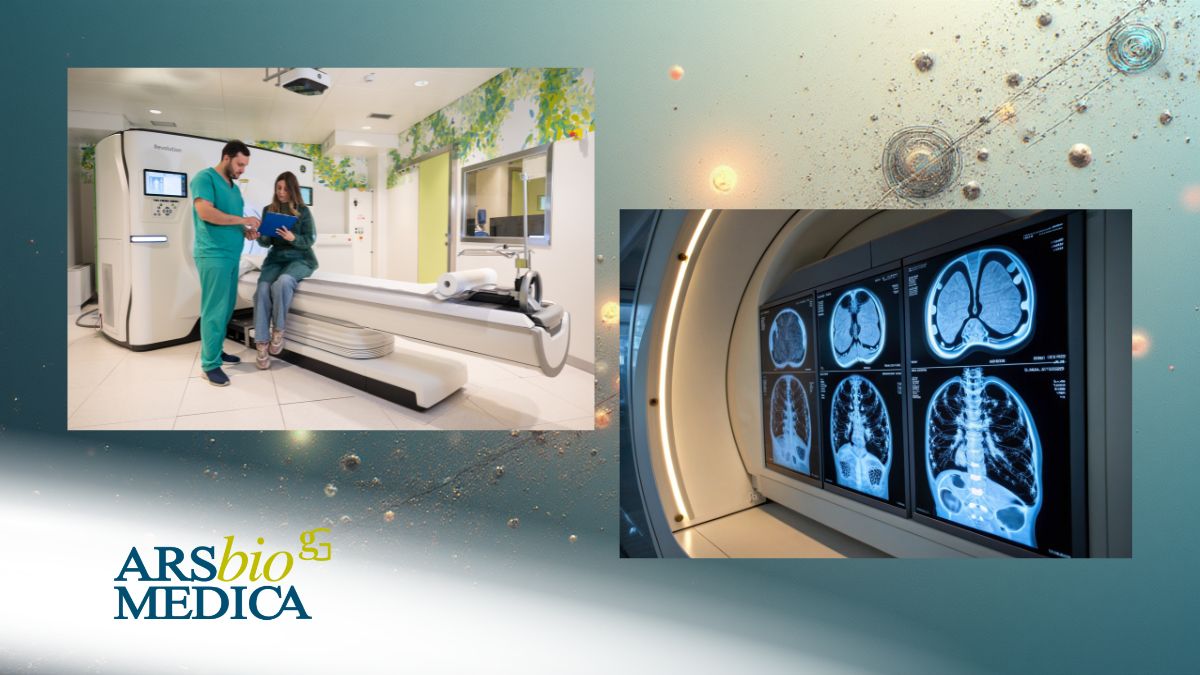
Today, advanced technology and cutting-edge equipment, such as the 512-slice CT scanner, allow us to explore the human body with a precision that was unimaginable just a few years ago. Among the most useful — yet often lesser-known — diagnostic tools is CT Angiography (Angio CT), an examination that visualizes arteries and veins by combining two extraordinary technologies: Computed Tomography (CT) and contrast agents.
To better understand what this exam entails — and why there’s no reason to be afraid of it — we spoke with Dr. Chiara Andreoli, a radiologist specializing in imaging diagnostics.
Dr. Andreoli, what exactly is a CT Angiography?
CT Angiography is a radiological exam that allows detailed visualization of arteries and veins. The procedure is quick and produces both two- and three-dimensional images of blood vessels, helping identify any stenosis, aneurysms, or other vascular abnormalities. It is considered a second-level diagnostic tool, often used to complement first-level tests such as color Doppler ultrasound.
It is an essential instrument for early diagnosis and for planning many surgical interventions or targeted therapies, both in elective and emergency settings. For example, in cases of suspected pulmonary embolism or stroke, CT Angiography is the gold standard — making the difference between a rapid diagnosis and a potentially dangerous delay, and enabling the most timely and appropriate treatment decisions.
When is a CT Angiography prescribed for the vessels of the upper and lower limbs?
It can be indicated in a variety of situations, such as evaluating suspected venous thrombosis, arterial stenosis or occlusions, and for accurately assessing the extent of atherosclerotic disease.
Many patients worry about CT scans due to radiation exposure or the use of contrast agents. How concerned should we be?
It’s a completely understandable concern, but technology has made tremendous advances today.
The new 512-slice CT scanner at Arsbiomedica allows us to minimize radiation exposure, as the dose is calibrated according to the patient, and also reduces the total amount of contrast agent injected.
Iodinated contrast agents are generally well tolerated. Before the exam, we always check for allergies or kidney insufficiency through a creatinine blood test, and only proceed if the results are normal, ensuring the procedure is completely safe.
Our goal is to obtain highest-quality images with the lowest possible risk for the patient.
Why is it important not to fear a CT Angiography when prescribed?
Because fear should never stand in the way of health.
CT Angiography is often a decisive diagnostic tool: it allows us to detect vascular problems early, before they become severe or cause irreversible damage. Postponing or refusing the exam out of fear can mean losing precious time for diagnosis and treatment.
It’s also important to remember that our role, as the medical team performing the exam, is to guide and reassure patients, explaining how the procedure works and, of course, reviewing the results. Trust is an essential part of care.
Being informed is the first step to overcoming fear.
CT Angiography is not the enemy, but a valuable ally for vascular health — especially when you are followed by a team of radiologists who work daily with the clinic’s multidisciplinary team, including specialists from every relevant field.
Thanks to our dedicated team of professionals, behind every exam is a group working for your safety, providing clear, fast, and precise answers.