


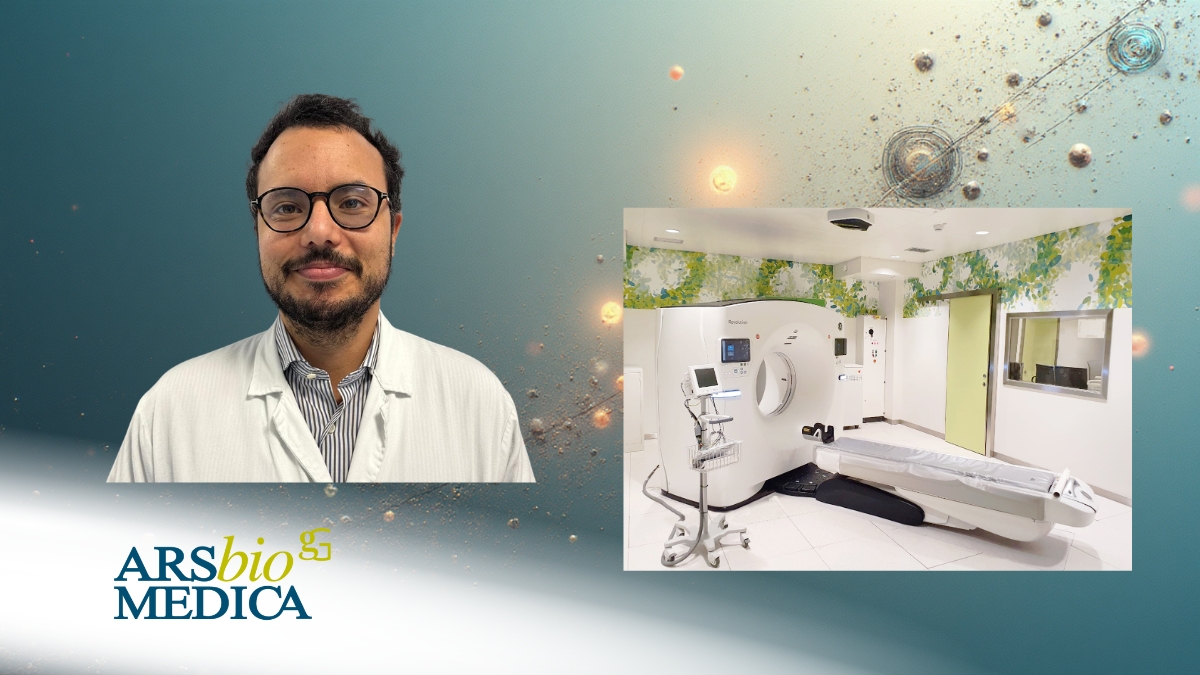
Articolo del 10/12/2025
CT (Computed Axial Tomography) is one of the most widely used examinations in diagnostic imaging. But what exactly does it involve, and when is it prescribed?
We discuss it with Dr. Luca Pugliese, radiologist at Arsbiomedica Clinic.
What is a CT scan?
A CT scan is a medical imaging exam that uses ionizing radiation to capture detailed information from inside the body.
Thanks to an advanced computerized data-processing system, this information is transformed into highly detailed digital images that allow physicians to study organs, tissues, bones, and blood vessels with exceptional precision.
It is an extremely versatile tool: it can be prescribed, for example, to examine the brain, lungs, heart, and the entire abdominal region—from the liver to the pancreas, from the spleen to the kidneys.
CT scanning is also indicated for the study of blood vessels, including the thoracoabdominal aorta and coronary arteries, as well as for the evaluation of bones, muscles, and the musculoskeletal system as a whole.
In which situations is a CT scan most often prescribed?
A CT scan is not a routine check-up: it is requested when a physician needs a clear and comprehensive view in order to:
-
Diagnose significant medical conditions
-
Assess the extent of a problem
-
Plan a treatment or surgical procedure
-
Monitor the progression of a disease
-
Evaluate trauma or acute conditions
All situations in which a standard X-ray or ultrasound would not provide enough information.
How Important Is the Radiologist’s Experience?
Modern medicine offers us increasingly advanced machines capable of producing extremely high-resolution images. However, no matter how precise these images are, they are not enough on their own.
As a radiologist explains:
“The radiologist’s expertise is essential. He or she reads the images and interprets them in the context of the patient’s clinical data, medical history, and symptoms. The radiologist also compares the findings with any previous exams to detect even the smallest changes over time.”
The radiologist’s trained eye—combined with ongoing communication with the patient’s referring physicians—remains an irreplaceable element for an accurate diagnosis.
Why Is Comparison with Previous Exams Important?
Every person is unique, and the body tells its own story over time.
This is why CT scans are often compared with earlier images: doing so helps reveal subtle changes that would otherwise go unnoticed, improving diagnostic accuracy and enhancing patient safety.
CT Scanning: An Alliance Between Science and Expertise
In conclusion, a CT scan represents a perfect balance between:
-
Advanced technology, which provides precise, detailed imaging
-
The radiologist’s expertise, applying careful interpretation, clinical experience, and a nuanced understanding of the patient
If you’d like, I can unify all sections into a complete article or adapt the tone for a social media carousel.