


Articolo del 02/04/2026
When it comes to diagnostic imaging, one of the most frequently asked questions is:
Which is better: a CT scan or an MRI?
The answer, however, cannot be a generic one.
A CT scan and an MRI are two different examinations, both essential, but each with specific clinical indications.
So when should one be performed instead of the other?
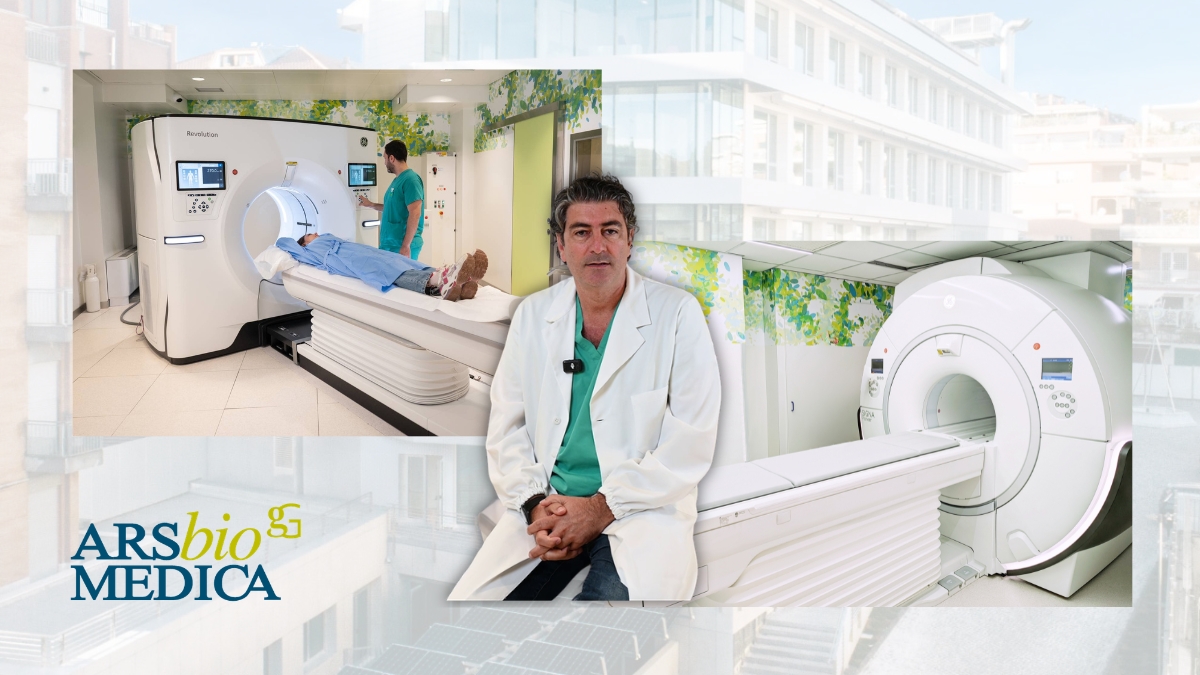
We explore this topic with Dr. Giulio Vallati, radiologist at the clinic.
Before undergoing any imaging examination, it is essential to consult with your physician and the clinic’s team of specialists in order to identify the most appropriate diagnostic pathway and obtain clear, accurate, and clinically useful answers.
CT and MRI: Two Different Exams, Two Different Functions
A CT scan (Computed Tomography) uses X-rays to produce highly detailed images of bones, internal organs, lungs, and blood vessels.
It is often recommended in cases of:
- trauma
- fractures
- medical emergencies
- chest or abdominal conditions
CT is particularly valuable in acute and emergency settings, such as:
- bleeding
- stroke
- hemorrhage
- bowel obstruction
In these situations, CT imaging is generally the most useful investigation.
An MRI (Magnetic Resonance Imaging), on the other hand, uses magnetic fields and radiofrequency waves and allows for an extremely accurate evaluation of soft tissues, including:
- muscles
- tendons
- joints
- brain
- spine
For this reason, the two examinations are not interchangeable.
They are selected based on the type of symptoms, the anatomical area to be assessed, and the underlying clinical suspicion.
Why is it important to consult a specialist first?
Patients often assume that one test is somehow “more comprehensive” than the other.
In reality, the choice should always begin with an accurate medical assessment.
A consultation with the physician and the clinic team allows for:
- a better understanding of symptoms
- evaluation of the patient’s medical history
- selection of the most appropriate test
- avoidance of unnecessary examinations
- faster and more accurate diagnosis
The guidance of experienced professionals is essential in determining which investigation can provide the right answers in the shortest possible time.
What is important to know before the exam?
There are certain preliminary tests and evaluations required before undergoing a CT scan or MRI with contrast medium, as requested by the radiologist.
CT scans are generally not recommended during pregnancy, in order to minimize radiation exposure to both the patient and the fetus.
However, thanks to our latest-generation imaging equipment, radiation exposure is reduced to the lowest possible level.
CT uses ionizing radiation, meaning radiation with sufficient energy to alter the structure of atoms and cells.
For this reason, its use must always be carefully assessed, particularly in pregnant patients.
As for MRI, patients with cardiac devices must inform the medical team in advance.
Not all patients with implanted cardiac devices can undergo MRI unless the device is compatible or appropriately deactivated.
Patients who suffer from claustrophobia should also be informed that MRI is a longer examination and may require additional support.
Finally, for both CT and MRI, all patients with a known allergy to contrast agents must notify the clinic staff before the examination.
The value of the clinic team
Choosing a specialized medical facility means relying not only on advanced diagnostic technology, but also on the expertise of a multidisciplinary team of physicians and healthcare professionals.
The dialogue between patient, specialist, and clinic staff makes it possible to create a targeted diagnostic pathway, reducing uncertainty and guiding the patient toward the most appropriate examination for their individual case.
Every clinical situation is different.
This is precisely why the initial consultation represents the first step toward an accurate diagnosis.
The right choice always begins with consultation
Rather than asking “CT or MRI?”, the real question is:
Which examination is most appropriate for my condition?
The answer always begins with a discussion with the physician and the clinic’s team of specialists, who can guide the patient toward the most suitable choice and provide clear, precise, and reliable diagnostic information.