

Articolo del 04/02/2026
Total-body computed tomography (CT) is today one of the most widely used and reliable diagnostic examinations in both oncology and preventive medicine. To better understand its clinical value, the differences between non-contrast and contrast-enhanced CT, and its role in early diagnosis, we interviewed Dr. Vallati, a radiologist at the clinic.
Dr. Vallati, what is a total-body CT scan and why is it so important?
A total-body CT scan is a radiological examination that allows rapid and detailed assessment of the entire body. By using X-rays and advanced image reconstruction systems, we obtain a comprehensive view of organs, soft tissues, the skeletal system, and blood vessels. This global approach is particularly important in oncology, where evaluating the patient as a whole is essential.
What is the role of non-contrast total-body CT?
Non-contrast CT often represents the first level of investigation. It is especially useful for studying lung parenchyma, detecting pulmonary nodules, evaluating bone structures, and identifying calcifications or hemorrhages. It is also indicated for patients who cannot receive contrast agents, such as those with renal insufficiency or known allergies.
When is the use of contrast material necessary?
Contrast-enhanced CT with intravenous contrast provides even more detailed information. The contrast agent highlights organ vascularization and potential lesions, allowing detection of primary tumors, characterization of suspicious masses, and more accurate assessment of disease extent. In oncology, it is often essential for staging—that is, determining how far the tumor has spread—and for planning the most appropriate treatment.
How does total-body CT contribute to prevention?
Prevention is an increasingly important aspect of medical care. In patients with a family history of cancer or specific risk factors, total-body CT can detect abnormalities at a very early stage, often while the patient is still asymptomatic. Early diagnosis significantly increases the chances of effective treatment and recovery.
Are there risks associated with radiation exposure or the use of contrast agents?
Like all radiological examinations that use X-rays, CT involves exposure to ionizing radiation. However, modern equipment employs controlled-dose protocols, reducing exposure to the minimum necessary. As for contrast agents, today we use highly safe products and thorough screening procedures that allow careful patient selection, thereby minimizing risks.
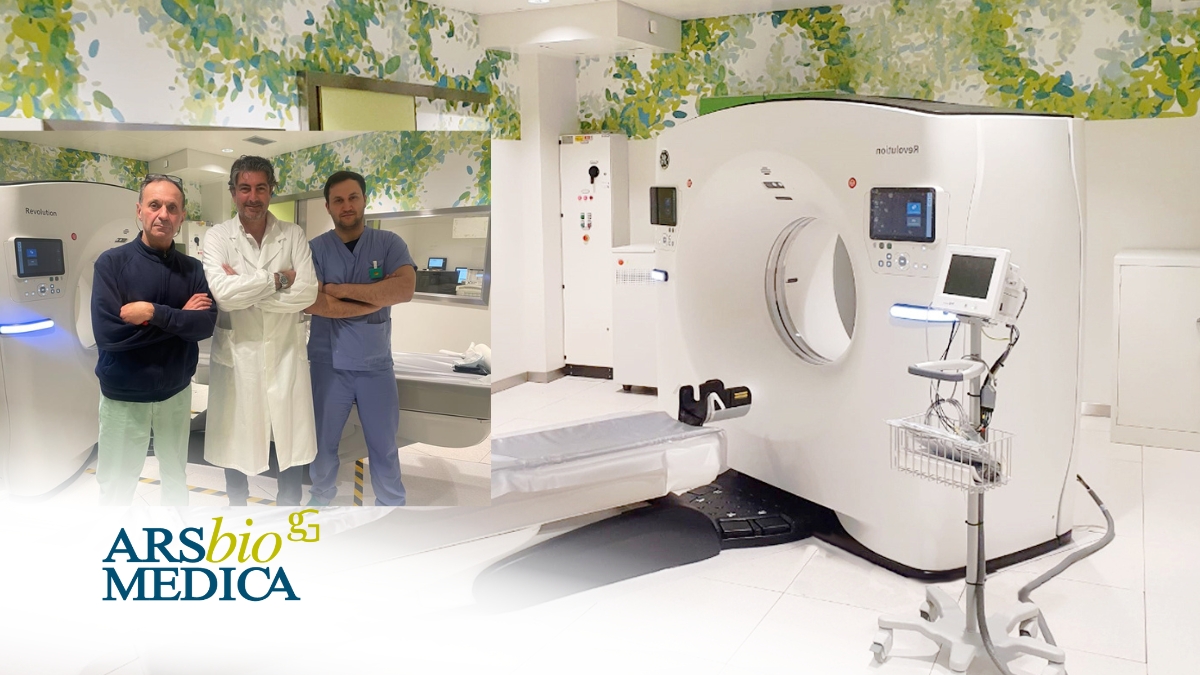
Thanks to the 512-slice CT scanner available at our clinic, equipped with an artificial intelligence system, radiation dose can be significantly reduced. The system adapts X-ray exposure to each patient’s body characteristics, ensuring a safe and comfortable examination.
In conclusion, what is the value of total-body CT for the patient?
Total-body CT, both with and without contrast, is a fundamental diagnostic tool. It enables accurate diagnoses, proper staging of oncological diseases, and effective monitoring of treatments. Integrating the two approaches—chosen according to the specific clinical question—allows us to offer patients a targeted, high-quality diagnostic pathway, with a significant impact on prognosis and quality of life.