

Articolo del 09/07/2026
When symptoms like swallowing difficulties, treatment-resistant gastroesophageal reflux, or retrosternal chest pain arise, esophageal manometry stands as the gold standard diagnostic tool to accurately assess the esophagus.
Today, thanks to the latest advancements in medical technology, patients can undergo high-resolution esophageal manometry at specialized centers right here in Rome. We delve into this advanced procedure in this exclusive interview with Professor Giovanni Di Nardo, a leading specialist at our clinic.
What is High-Resolution Esophageal Manometry, and What is its Purpose?
Prof. Di Nardo, could you explain exactly what this advanced diagnostic test entails?
“Esophageal manometry is a diagnostic test that measures the movements and muscular pressures within the esophagus during the act of swallowing. Seamless food transit depends on peristalsis—the coordinated contraction of muscles—and the proper function of two valves: the upper and lower esophageal sphincters.
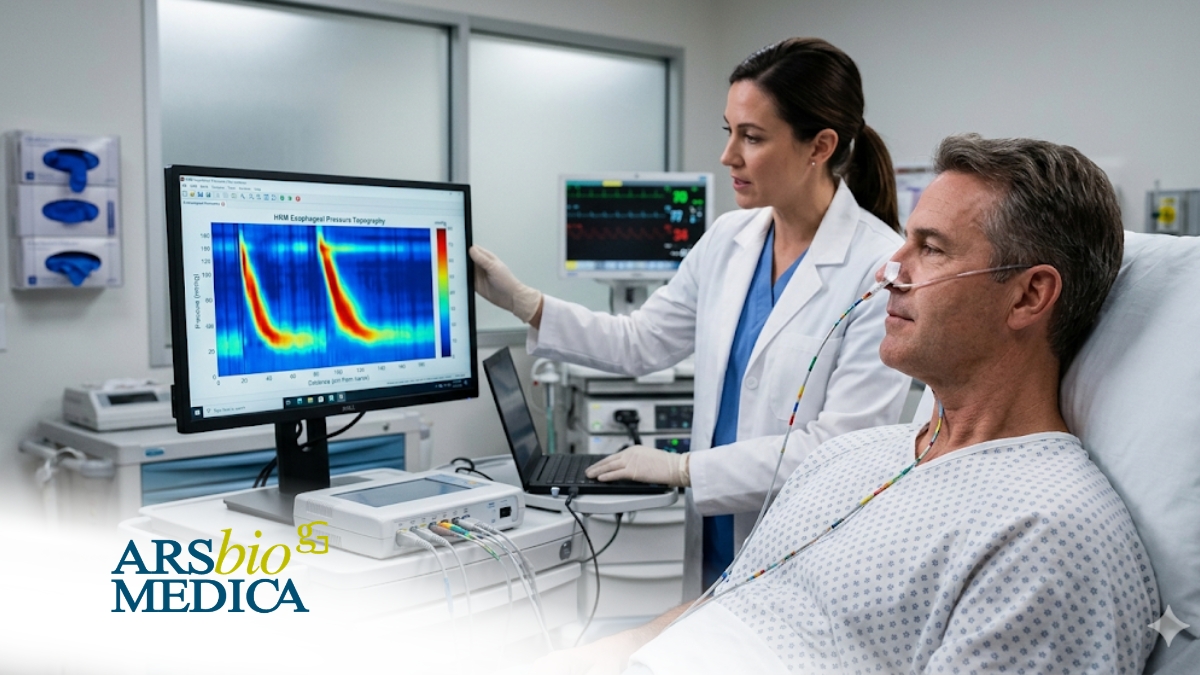
Manometry evaluates whether these mechanisms operate synchronously and correctly. The procedure is performed by introducing a thin, flexible nasogastric catheter. This probe is equipped with numerous pressure sensors along its entire length, which transmit real-time data to a computer. The system then generates a highly detailed, color-coded map of esophageal pressures. It is an entirely safe and routine clinical procedure.”
When is Esophageal Manometry Necessary?
What symptoms or clinical indications prompt a gastroenterologist in Rome to prescribe this specific evaluation?
“As a specialist, I generally recommend high-resolution esophageal manometry for the following clinical presentations:
-
Dysphagia: Difficulty or pain when swallowing solids or liquids.
-
Gastroesophageal Reflux Disease (GERD): Specifically when it fails to respond to conventional pharmacological therapies.
-
Esophageal Achalasia or Motility Disorders: Suspected cases require this test for both initial diagnosis and ongoing follow-up monitoring.
-
Pre-operative Evaluations: It is an essential assessment prior to undergoing antireflux surgery to ensure the long-term success of the procedure.”
How Should a Patient Prepare for the Test?
Are there specific guidelines to follow on the day of the appointment?
“Yes, the preparation is simple but strictly mandatory: the patient must fast completely from both food and liquids for at least 8 hours prior to the exam. This is vital because any residual food in the stomach would not only compromise the diagnostic accuracy and reliability of the test but would also increase the risk of nausea or vomiting during the procedure.”
The Procedure: What to Expect and How Long It Takes
Let us address the question that most concerns patients scheduled for esophageal manometry in Rome: Is the exam painful? What should they expect?
“While this is a very common anxiety, I want to reassure patients: the procedure is not painful. During the exam, the patient is comfortably seated or reclined. We apply a topical anesthetic gel to the catheter to minimize discomfort before gently inserting it through one nostril. Once the tube reaches the back of the throat, we ask the patient to swallow a small sip of water. This natural movement helps the probe slide smoothly down the esophagus and into the stomach.
Patients may experience mild initial discomfort, a foreign-body sensation in the throat, watery eyes, or a slight urge to cough, but these sensations dissipate within a couple of minutes. I must emphasize that the catheter does not interfere with breathing in any way. Furthermore, we do not administer sedatives because we require the patient’s active cooperation; they will be asked to swallow small sips of water at my direction. The entire procedure takes approximately 20 to 30 minutes.”
Post-Procedure and Recovery
What happens once the pressure measurements are complete?
“At the conclusion of the test, the catheter is removed quickly and painlessly. Because no sedation is used, the patient can leave the medical clinic immediately, resume eating and drinking normally, and return to their daily activities or work without any restrictions.”
Frequently Asked Questions (FAQ) regarding Esophageal Manometry in Rome
Is the exam painful?
No, esophageal manometry is not painful. You may feel a slight, brief discomfort as the thin catheter passes through the nose, but the vast majority of patients describe the experience as entirely tolerable.
How much time should I allocate for the clinic appointment?
The actual measurement and procedure take roughly 20 to 40 minutes. However, we recommend planning for about 1 hour total to account for the check-in process, initial preparation, and the post-test consultation.
How long does it take to receive the results?
The data recorded by the computer is thoroughly analyzed and interpreted by the gastroenterologist. Typically, a detailed, written diagnostic report is available within a few days of the test.
Do I need to stop taking my medications before the test?
Yes, certain medications (such as prokinetics, antacids, or specific opioid pain relievers) can alter esophageal motility and skew the test results. It is imperative to disclose all medications you are currently taking at the time of booking so that we can provide precise instructions on which therapies to pause and for how many days.
Looking for a Specialized Center for Esophageal Manometry in Rome?
If you need to schedule a high-resolution esophageal manometry in Rome with Prof. Giovanni Di Nardo, please contact our administrative team to check our earliest availability and receive all necessary preparation instructions.